
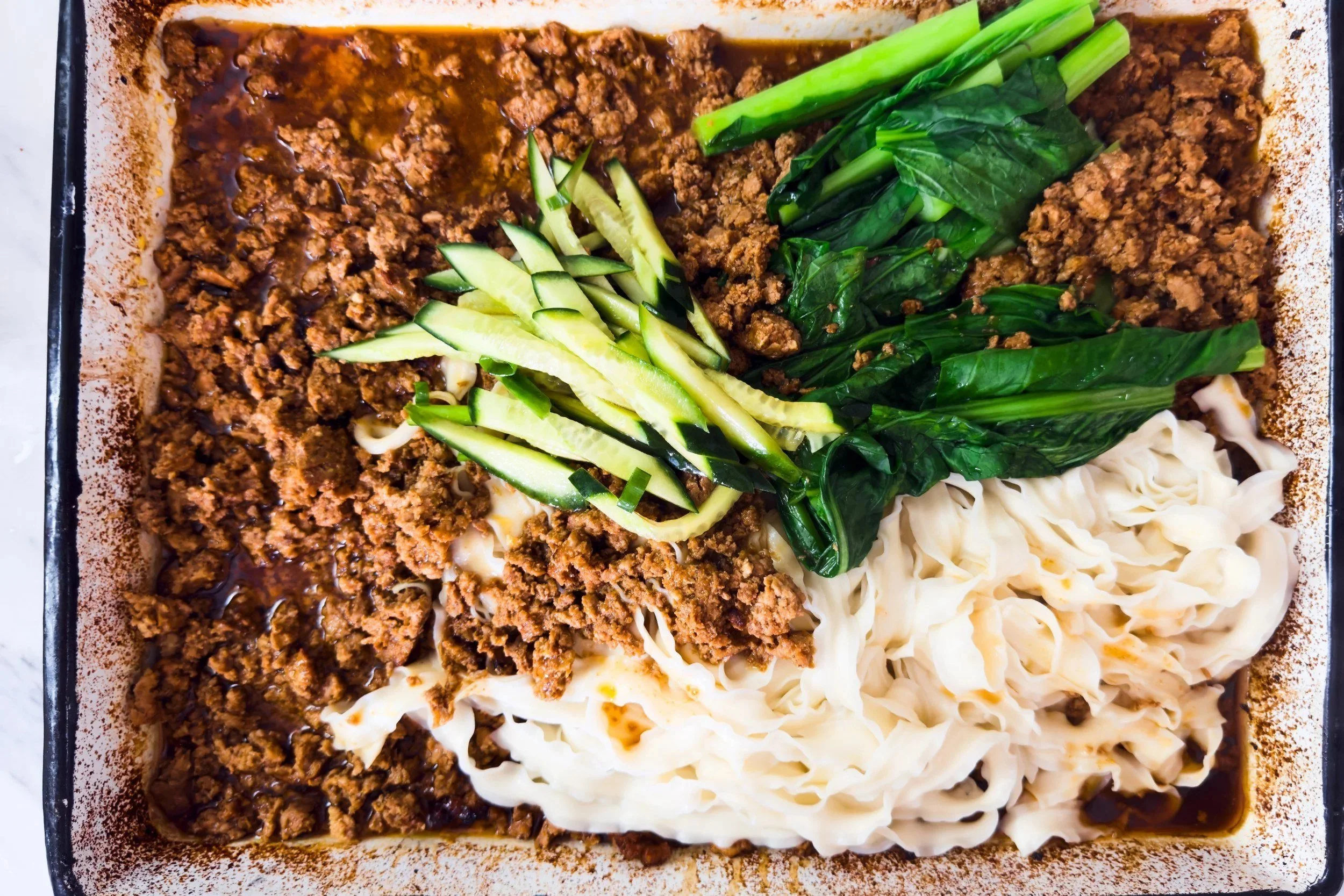
A super simple tray after last week's tray foray - I wasn't ready to give it up. It's a wink at an old favourite from my first cookbook, but everyone here has decided they hate peanuts, so I've made it a little bit more black vinegar and soy. Is it traditional? Absolutely not. Is it easy and fitting to Monday's MEH energy? Yes, it is.
Serves: 6
Prep time: 15 minutes
Cook time: 35 minutes
INGREDIENTS
Pork
oil, for the tray
1 kg pork mince
500 g pork and beef mince (I used bolognese mince that needed cooking)
1 tbsp grated ginger
4 garlic cloves, crushed
2 tbsp black vinegar
2 tbsp dark soy sauce
2 tbsp hoisin sauce
1 1/2 tbsp gochujang (Korean chilli paste)
1 tbsp sugar
1 tsp sesame oil
Stock
1 cup (250 ml) hot chicken stock, made with chicken stock powder and boiling water
1 tbsp black vinegar
1 tbsp sesame oil
1 tsp grated ginger
1 spring onion, knotted
Cucumbers
3 cucumbers, sliced
a splash of white vinegar (or black, if that's what you have)
a splash of light soy sauce
a splash of sesame oil
To serve
500 - 550 g dried hand-pulled wheat noodles (or rice noodles, or rice)
3 bunches choy sum
chilli oil, as much as you like
METHOD
Preheat the oven to 220°C fan-forced and oil a big roasting tray.
Put the pork and beef mince in a bowl with the ginger, garlic, black vinegar, dark soy, hoisin, gochujang, sugar and sesame oil. Massage it all around the meat, then put it straight into the oiled tray and spread it out.
Roast for about 15 - 20 minutes, until it's crispy on the top.
Meanwhile, mix the cucumbers with a splash of white vinegar, a splash of light soy and some sesame oil, and leave them in the fridge to chill while everything's cooking, so they're really nice and crisp.
Make the chicken stock with stock powder and boiling water, stir in the ginger and sesame oil, and drop in the knotted spring onion to steep while it's warm.
Use a whisk to break the pork up into smaller chunks. Add the extra tablespoon of black vinegar, then pour the stock throughout the mince. Put it back into the oven and let it simmer and crisp for another 10 minutes.
While it's in there, cook the noodles and blanch the choy sum.
Serve the pork over the noodles with the choy sum and the cucumbers, and add as much chilli oil as you want to make it completely your own.
HINTS
Doing it in the tray means you avoid the splatter that usually goes all over the place - T-shirt, kitchen, floor. Especially if you don't have a really good wok that has a large amount of space in it.
Mixing up the beef and the pork takes the porkiness out, but still keeps it sweet and juicy, which is what we like.
You can make it with any kind of sauces, really. All of these things are interchangeable. It's just about giving it a go. The sweet, tangy stickiness of Asian specialty sauces mixed with the tartness of vinegar and the juiciness of pork is what we're going for here.
I found these really nice dried hand-pulled wheat noodles. They have a really lovely feathery edge, which are great for picking up and slurping through oily sauces. But you could use rice noodles. You could even just serve this with rice.
The Asian greens and the cucumber for a tangy punch just balance it out perfectly.
I used 2 cucumbers, but you'll probably need more once people start eating, so I've written it with 3.
No black vinegar for the cucumbers? Use white, or vice versa.
NUTRITION (per recipe total - serves 6 - guide only):
Energy: approx. 6,100 kcal (25,500 kJ)
Protein: approx. 355g
Fat: approx. 295g
Carbohydrate: approx. 475g
Sodium: approx. 5,500mg
This nutrition information is a guide only and may vary depending on brands, exact quantities, and ingredient substitutions used.