
Bolognese & All Its Baggage
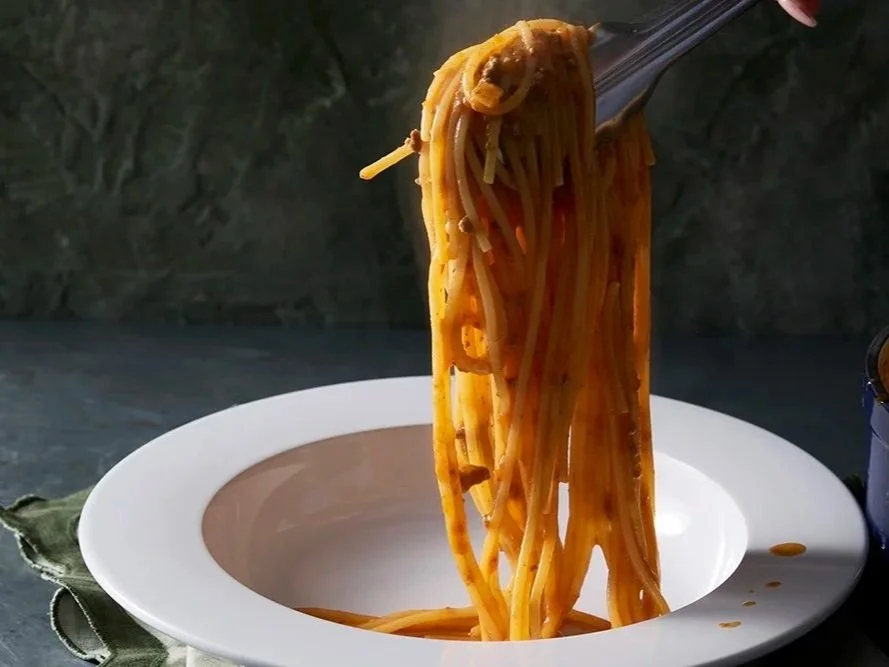
It's the one dish in this book that's already in a relationship with everyone you love.
Serves: 12-16
Prep time: 25 minutes
Cook time: 4 hours
SOURCE: Tender (Murdoch Books), page 36, Beef chapter. Photography by Rob Palmer.
INGREDIENTS
750g minced beef
750g minced pork
750g minced veal
2 tablespoons olive oil
2 brown onions, finely diced
2 carrots, peeled and finely diced
3 celery stalks, finely diced
4 garlic cloves, finely chopped
250ml (1 cup) dry white wine
2 tablespoons tomato paste
400g tinned whole peeled tomatoes, hand-crushed or pureed
400g tomato passata
1 litre (4 cups) chicken stock
1 bay leaf
1 parmesan rind
250ml (1 cup) full-cream milk
salt
METHOD
In a bowl, combine the minces, then form the mixture into a few large, rough patties. Size and number don't matter as we'll be breaking up the mince later.
Heat the olive oil in a large heavy based casserole over medium-high heat. Place half the patties into the pot and brown very well on one side only, leaving the other side raw. Set the browned patties aside. The half-seared patties give you gorgeous textural variation and deep background flavour without heaviness.
Reduce the heat slightly and add the onion, carrot and celery to the same pot, scraping up any browned bits from the bottom of the pan. Cook until softened. Add the garlic and cook for a further minute.
Pour in the white wine and allow it to simmer and reduce almost completely, glazing the vegetables.
Return the meat to the pot, breaking up the browned and raw mince roughly with a wooden spoon. Stir in the tomato paste and cook for 2-3 minutes.
Add the crushed tomatoes, passata, chicken stock, bay leaf and parmesan rind, and stir well to combine.
Bring to a gentle simmer, then reduce the heat to low. Cook, uncovered, for 3-4 hours, stirring occasionally and topping up with more stock or water if needed, to keep it rich and saucy.
Stir in the milk during the last hour of cooking, allowing it to slowly absorb into the sauce.
Remove the parmesan rind and bay leaf, then season with salt to taste before serving.
Letting the sauce cool and rest overnight will bring an even deeper richness when reheated.
HINTS
There are two kinds of browning going on in this pot and they do different jobs. Searing half the meat hard on one side is the Maillard reaction - amino acids and sugars rearranging under high heat into hundreds of new savoury compounds, which is where roast meat depth comes from. It is not caramelisation, which is sugar breaking down on its own with no protein involved. The onions caramelise, the meat Maillards. The half that goes in raw stays sweeter and softer, so you get all of that depth without the whole pot tasting heavy.
Uncovered for 3-4 hours is the point, not an inconvenience. The liquid has to cook out for the sauce to concentrate, and topping up with more stock or water and reducing it down again builds far more flavour than simply starting with less. Concentration you build beats concentration you began with.
For ultimate pasta and sauce cling, save some pasta cooking water and combine a few tablespoons with the pasta and some sauce in the pan over low heat, before serving with more sauce on top.
LEFTOVERS
Refrigerate in an airtight container for up to 3 days, or freeze for up to 3 months.
Of course you could make lasagne. You could have this on toast with cheese, which is delicious. You could have it on a bowl of spinach, gently warmed. There are so many ways to have leftover bolognese.
NUTRITION (per recipe total, serves 12-16 - guide only):
Energy: approximately 26000kJ (6215 calories)
Protein: 445g
Fat: 370g
Saturated fat: 145g
Carbohydrates: 100g
Sugars: 55g
Fibre: 18g
Sodium: 3500mg
Note: salt is added to taste at the end, so sodium varies.
This nutrition information is a guide only and may vary depending on brands, exact quantities, and ingredient substitutions used.